




Professional Test and Tag Services in Hobart
Safety of your employees should be the number one priority on your list! Australian Work Safe standards require that all electrical equipment are tested and tagged for safe working environment. The current Australian standard AS/NZ 3760:2022 specifies that all testing of electrical equipment needs to be performed by a professionally trained Test & Tag technician.
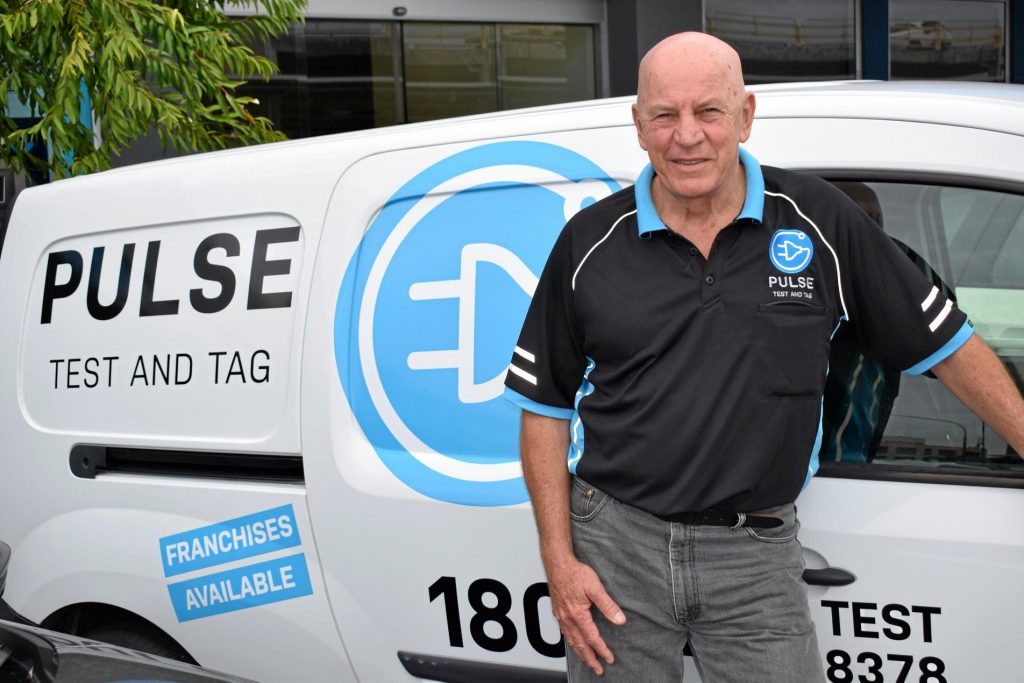
At Pulse Test And Tag Hobart our technicians are professionally trained and are up to date with the latest technology. They offer a comprehensive visual and electrical test on all appliances before deeming them safe to use.
Pulse Test And Tag Hobart pride themselves on the safe and reliable work ethics. They will adhere to all industry and domestic safety regulations. They use the latest portable appliance testing equipment that provides you with up to date inventory for your business.
Pulse Test And Tag Hobart are passionate about customer service and the safety of people. They pride themselves in delivering an exceptional service at all times.
Pulse Test And Tag Hobart are fully insured giving you peace of mind whenever they enter your premises. They offer an extensive range of packages and free non obligation quote.
Pulse Test And Tag Hobart specialises in the following services:
- A visual check of all appliances and electrical leads to identify any problems or defects
- Electrical tests performed with a Portable Appliance Tester on all items
- Tagging of all appliances and leads with next due dates
- An Electrical Equipment Test
- Report detailing results of every test
- A computer generated report detailing appliances and test results
- Anniversary Date follow up reminders
- Earth leakage Testing
- Current leakage Testing
- Insulation resistance Testing
- Polarity Testing
- Microwave radiation leakage testing
- Portable RCD (Safety Switch) Testing
- Fixed RCD (Safety Switch) Testing
Our Specialised Testing Services in Hobart
Portable Appliance Testing (PAT)
Testing of all plug-in equipment (computers, kettles, power tools).
RCD (Safety Switch) Testing
Essential for protecting your staff from electrical shocks.
3-Phase Equipment Testing
Specialized testing for industrial machinery and commercial kitchens.
Microwave Leakage & Fire Extinguisher Inspections
A one-stop shop for your office safety audits.
Frequently Asked Questions
Yes, we offer flexible after-hours testing for all areas of Tasmania.
Absolutely. All our Tasmanian franchisees are fully trained, insured, and police-checked.
As an employer, you bear the responsibility of safeguarding the well-being of both employees and visitors within the workplace, ensuring their safety from potential injuries and health risks. In adherence to the OHS and WHS Acts and regulations across Australia, it is imperative to proactively address safety risks associated with electrical hazards. Adopting a systematic risk management approach becomes essential to either eliminate or effectively control these electrical hazards. Following a comprehensive risk assessment, you can proceed to implement a variety of control measures, including:
- routine visual checks
- regular inspection
- maintenance
- repair
- replacement
- use of residual current devices (RCDs)
- and, testing of identified electrical equipment.
Occasionally, a piece of equipment may experience a failure, placing the onus on the technician to promptly report the defective item and appropriately label it. Such items are removed from active use, and, based on the nature of the fault, additional testing or necessary repairs are undertaken to address and rectify the issue.
A Portable Appliance Tester (PAT) is a specialized electronic testing device crafted to execute a series of automated tests on electrical equipment that features plug-in capabilities, in accordance with the specifications outlined in AS/NZS 3760:2022.
Indeed, they do. It poses an electrical hazard for the equipment to remain live during testing. This precaution is taken to guarantee the safety of both our operators and customers. Following the completion of the assessment, the equipment can then be reactivated.
An RCD, or Residual Current Device, is specifically engineered to shield against the risk of a fatal electric shock in the event of contact with a live item, such as an exposed cable or a damaged light switch. Unlike standard fuses or circuit breakers, RCDs provide an enhanced level of personal protection.
The duration for testing and tagging varies based on the particular appliance undergoing examination, but generally, each session should only consume a few minutes. The initial step involves a visual inspection of the appliance, guiding the technician in determining the appropriate electrical tests to be conducted. Certain appliances necessitate multiple tests before being officially labeled as safe and meeting the required standards.